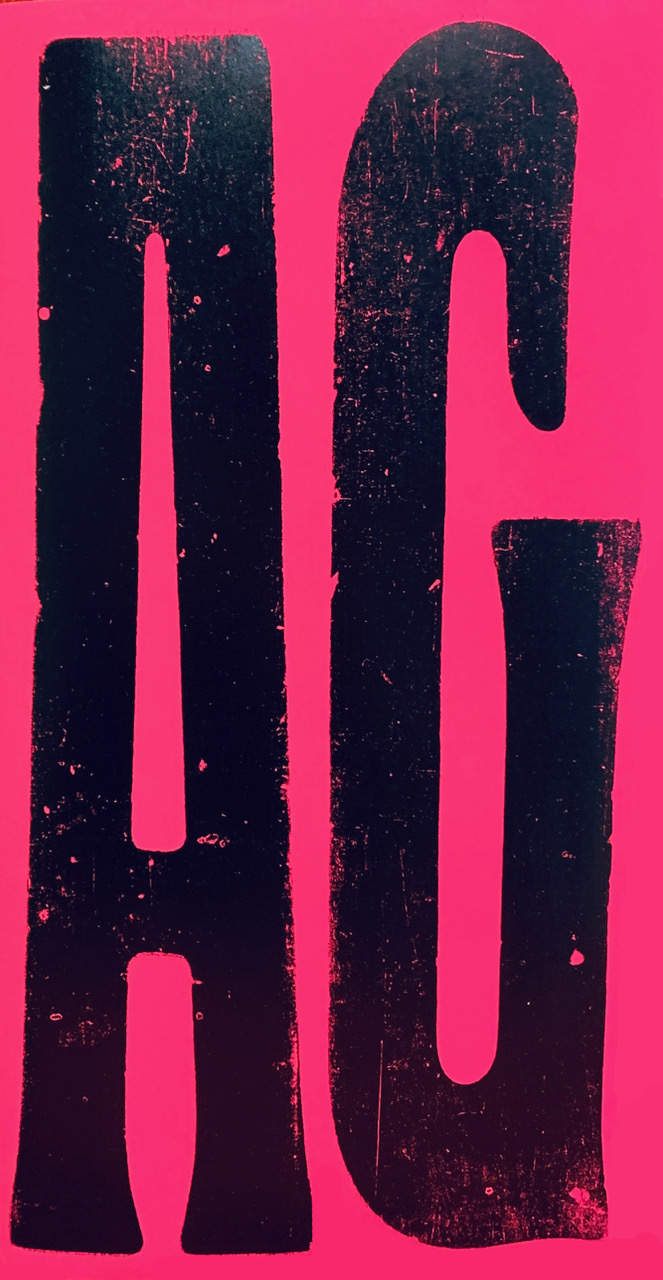
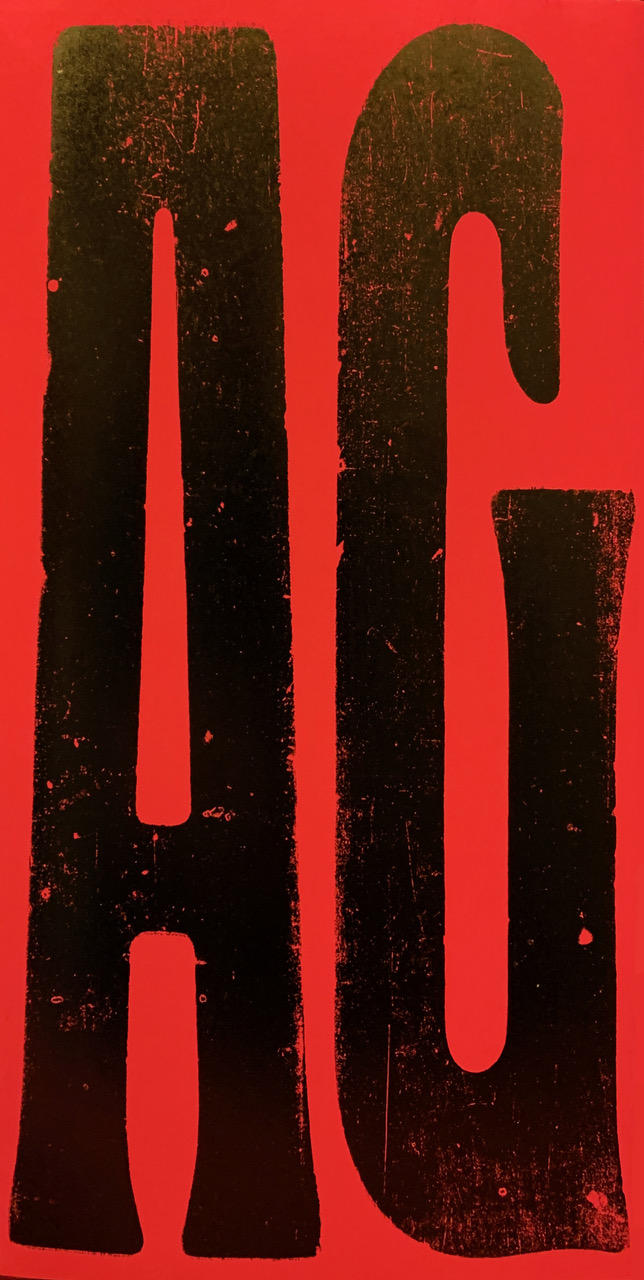
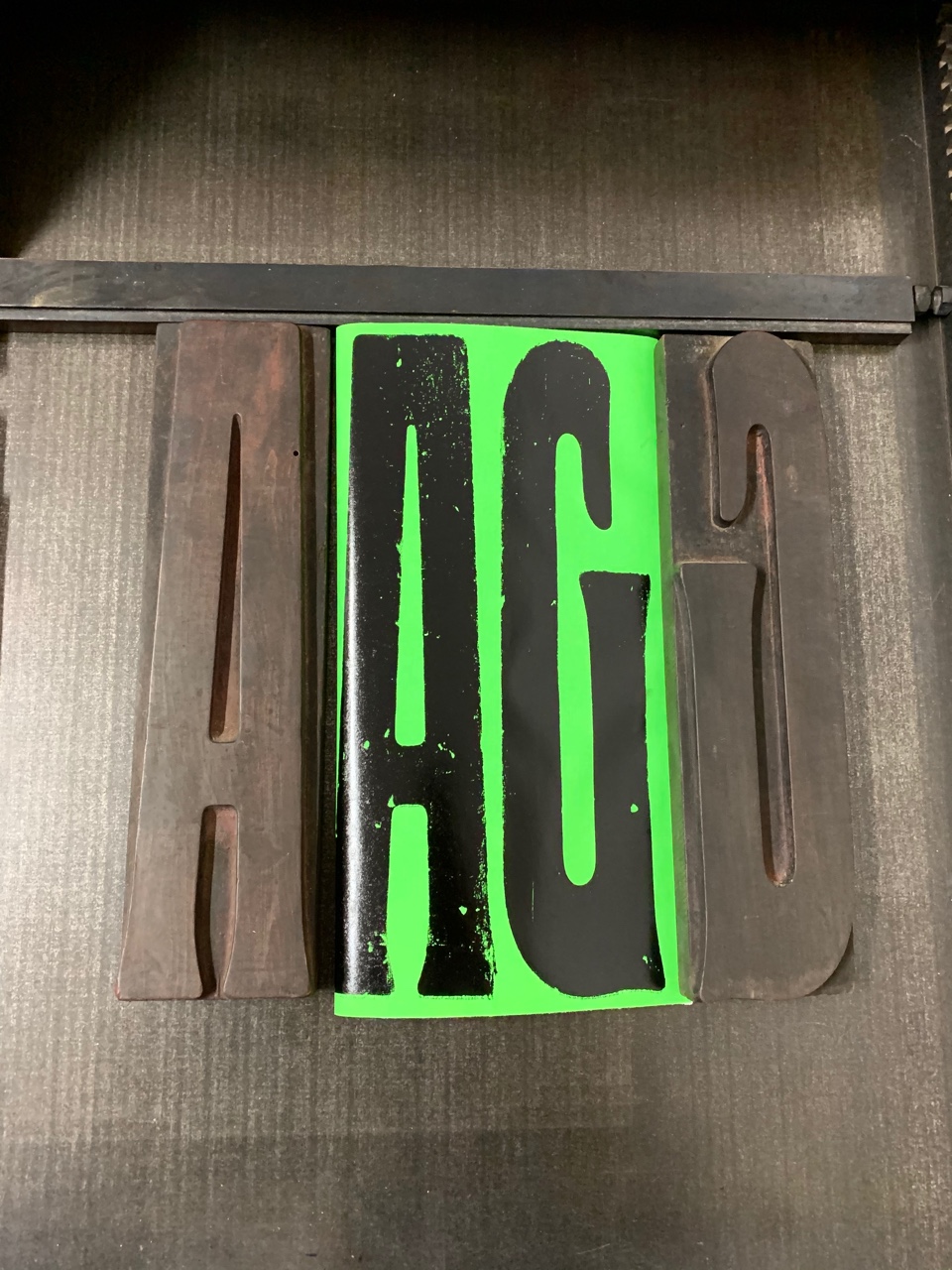
Each poster was printed with a Saroglia press by Margarita Fjodorova and Pierpaolo Pregnolato, using Cranfield Caligo Safe Wash Relief Ink Phthalo Blue on vintage 90gr yellow paper and late 1800 venetian wooden type fonts.
This limited edition poster has been produced by the publishing house Damocle Edizioni – Venice.
Limited edition of 50 numbered exemplars Dimensions: 50x70cm 60 €
In the Russian language, the word Я is the personal pronoun “I”. A popular saying based on this fact, “ja is the last letter of the alphabet” (Я последняя буква алфавита), is used to teach children modesty and humility.
Each poster was printed with a Saroglia press by Margarita Fjodorova and Pierpaolo Pregnolato, using Adana Metallic Silver Ink on vintage 90gr black paper and wooden typefaces from the Soviet times. Each poster will be shipped in a protective cardboard tube, made from renewable and recyclable sources.
This limited edition poster has been produced by the publishing house Damocle Edizioni – Venice.
Poesie del Disamore e altri lavori Poems of Disenchantment and other works
Traduzione di Scott Davison
In copertina: illustrazione di Margarita Fjodorova.
ISBN 978-88-32163-17-9
15 €
Scott Davison’s poetry, short stories, translations, and other works have appeared in numerous publications throughout the years. He has co-written several musicals, and his plays have been produced in Los Angeles. His short play The Sadness of Wine is dedicated to Cesare Pavese. He currently teaches in an internationally renowned school for the performing and visual arts.
Le poesie, i racconti, le traduzioni e altri lavori di Scott Davison sono apparsi in numerose pubblicazioni nel corso degli anni. Ha co-scritto diversi musical e le sue opere sono state prodotte a Los Angeles. La sua breve opera La tristezza del vino è dedicata a Cesare Pavese. Attualmente insegna in una scuola di fama internazionale per le arti visive e dello spettacolo.
Cesare Pavese (Santo Stefano Belbo, September 9, 1908 – Turin, August 27, 1950) was a poet, writer, translator and publisher, considered one of the greatest and most important Italian intellectuals of the twentieth century.
Cesare Pavese (Santo Stefano Belbo, 9 settembre 1908 – Torino, 27 agosto 1950) è stato un poeta, scrittore, traduttore ed editore, considerato uno dei più grandi e importanti intellettuali italiani del XX secolo.
Pietro Aretino (Arezzo, 1492 – Venezia, 1556). Dopo un primo soggiorno formativo a Perugia (1508-1517-1518), si stabilisce a Roma (fino al 1527) e posteriormente fa di Venezia sua casa e rifugio. Conosciuto soprattutto come critico par excellence per le pasquinate e maestro della sessualità grazie ai Sonetti lussuriosi (1527 o 1537) e le due puntate dei Ragionamenti (1534 e 1536), scrisse anche poesia petrarchesca (Opera nova, 1512), testi religiosi (come l’Umanità di Cristo, 1535 e 1538), commedie e molte lettere. È un personaggio maledetto, che inoltre ha un grande legame con Venezia.
In copertina: illustrazione di Margarita Fjodorova
ISBN 978-88-32163-13-1
12 €
Nel racconto si concentrano riferimenti storici, letterari, pittorici, relativi a Venezia che volutamente confondono epoche storiche nel tentativo di costruire una dimensione onirica del testo che risulta già annunciata dal sottotitolo. Nonostante la complessità di una narrazione che procede per sequenze staccate ed anticipa alcune istanze surrealiste, Venise la nuit rappresenta uno straordinario esempio della produzione letteraria dei fratelli Edmond e Jules de Goncourt, prima che questa si orienti verso i temi sociali di Germinie Lacerteux (1865) la cui prefazione è considerata il manifesto del Naturalismo.
Edmond (1822-1896) e Jules (1830-1870) de Goncourt furono due scrittori e collezionisti francesi. Autori di numerosi romanzi scritti a quattro mani, ascrivibili alla corrente del Naturalismo. L’Académie Goncourt, che premia ogni anno un’opera in lingua francese, fu istituita per testamento alla morte di Edmond.
This limited edition has been produced by the publishing house Damocle Edizioni – Venice in 99 numbered copies on Papermilk 140 gr. paper by Cartiera Cordenons. The printing was made by Margarita Fjodorova and Pierpaolo Pregnolato with a Saroglia press, polymer plates, wooden and metal typefaces.
In 1957, when he was thirty years old, Ginsberg made his first visit to Europe. When he left home he was an unknown poet, having published only a handful of poems in obscure little magazines. When he returned a year later, he was world famous as the author of the collection of poems “Howl And Other Poems”. After stopping in Morocco to visit with his old friend, William S. Burroughs, Allen and Peter Orlovsky continued on to Spain, France, and finally Italy where they settled down to stay with Alan Ansen for a few months. They had met Ansen in New York City a decade earlier when he was working as W.H. Auden’s secretary. Ansen himself had just been in Tangier with Jack Kerouac helping Burroughs put together the manuscript for Naked Lunch. Ginsberg and Orlovsky stayed with Ansen at his apartment in Venice for much of the summer and it was during this period that Allen wrote many letters including this one to his brother, Eugene Brooks, back in New York. [Bill Morgan]
Bill Morgan is an archivist, writer, and editor, who has written and edited more than forty books dealing with the Beat Generation. Among them are I Celebrate Myself: The Somewhat Private Life Of Allen Ginsberg; The Typewriter Is Holy: The Complete, Uncensored History Of The Beat Generation; and The Best Minds Of My Generation: A Literary History Of The Beats. He has continued to work as an archivist working with literary figures like Arthur Miller, Lawrence Ferlinghetti, and Oliver Sacks. This work was conceived while in residence with the Emily Harvey Foundation in Venice and it to them that this book is dedicated.
Bill Morgan is an archivist, writer, and editor, who has written and edited more than forty books dealing with the Beat Generation. Among them are I Celebrate Myself: The Somewhat Private Life Of Allen Ginsberg; The Typewriter Is Holy: The Complete, Uncensored History Of The Beat Generation; and The Best Minds Of My Generation: A Literary History Of The Beats. He has continued to work as an archivist working with literary figures like Arthur Miller, Lawrence Ferlinghetti, and Oliver Sacks. This work was conceived while in residence with the Emily Harvey Foundation in Venice and it to them that this book is dedicated.
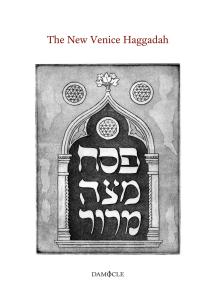
This lavishly illustrated Haggadah, the beloved Jewish book read around the Seder table on Passover eve, celebrates the creative legacy of the Ghetto of Venice. Founded in 1516 to confine the Jews, the Ghetto became the home of a vibrant community of people from Italy, Germany, Spain and the Levant. It made Venice the capital of Jewish publishing, with the first complete Talmud, Torah commentaries, mysticism and, in 1609, a famous Haggadah printed in several languages reflecting the diversity of the Ghetto’s Jewish communities. To mark the Ghetto quincentennial, Beit Venezia, the international center for Jewish Studies in Venice, invited eight Jewish artists from all over the world to design a new Venice Haggadah, after a full immersion in the city and a residency at the Scuola Internazionale di Grafica. The twenty-four beautiful etchings, first exhibited at the Jewish Museum of Venice, offer a unique visual commentary on the Hebrew text, accompanied by a new English translation intended to invite discussion and interpretation. The New Venice Haggadah is informed by the spirit of the “original” while being consummately fresh, contemporary and innovative.
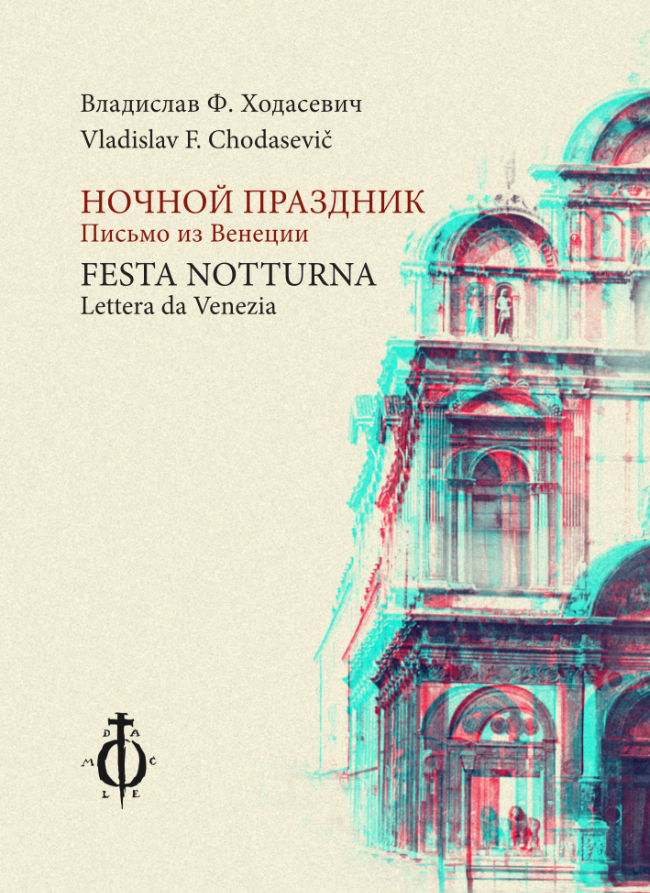
НОЧНОЙ ПРАЗДНИК (Письмо из Венеции) / FESTA NOTTURNA (Lettera da Venezia)
Владислав Ф. Ходасевич – Vladislav F. Chodasevič
Traduzione e introduzione di Maria Emelianova
ISBN 978-88-32163-15-5 10 €
Questo breve racconto è stato scritto nell’estate del 1911, durante il primo soggiorno in Italia di Vladislav Chodasevič (1886—1939). La riflessione dell’autore spazia verso quel passato di ricchezza culturale e artistica del popolo italiano che ha affascinato e ispirato generazioni di intellettuali russi. Passato che per Chodasevič è stato dimenticato dall’italiano moderno, e la cui pallida imitazione viene svenduta per poche lire a folle di turisti. Il racconto contiene una fotografia dinamica di Venezia di inizio Novecento: il turismo parte dalle spiagge del Lido e i segni del crollo del campanile sono ben visibili in piazza San Marco. Eppure è difficile, leggendo il testo più di un secolo dopo, non estendere le parole di Chodasevič verso i giorni nostri. Nonostante l’umorismo amaro che pervade la descrizione della festa, nelle righe finali l’autore esprime solidarietà con i veneziani e sembra suggerire che la memoria e la cura del patrimonio del passato siano condizioni necessarie per vivere un presente dignitoso, nel rispetto del dono della bellezza che da sempre colpisce gli artisti russi in visita in Italia. [dall’introduzionedi Maria Emelianova]
Vladislav Felicianovič Chodasevič nacque a Mosca nel 1886. Dopo l’emigrazione a Berlino (1922), ha vissuto a Praga, Parigi e fu ospite di Maksim Gor’kij a Sorrento. Uno dei protagonisti della poesia russa del primo Novecento, Chodasevič fu autore di cinque raccolte, tra cui La Pesante Lira (1923) e La Notte Europea (1927), ma anche di memorie (Necropoli, 1936) e di studi sui poeti russi. Morì a Parigi nel 1939.
Limited edition of 35 numbered exemplars
Dimensions: 45x70cm
60 €
Each poster was printed with a Saroglia press by Margarita Fjodorova and Pierpaolo Pregnolato,
using Adana Metallic Gold Ink on vintage 60gr red-scarlet paper. The wooden typefaces come from a printing house in Warsaw, Poland, 1890-1919.
Each poster will be shipped in a protective cardboard tube,
made from renewable and recyclable sources.
This limited edition poster has been produced by the publishing house Damocle Edizioni – Venice.
Per fornire le migliori esperienze, utilizziamo tecnologie come i cookie per memorizzare e/o accedere alle informazioni del dispositivo. Il consenso a queste tecnologie ci permetterà di elaborare dati come il comportamento di navigazione o ID unici su questo sito. Non acconsentire o ritirare il consenso può influire negativamente su alcune caratteristiche e funzioni.
Funzionale
Sempre attivo
L'archiviazione tecnica o l'accesso sono strettamente necessari al fine legittimo di consentire l'uso di un servizio specifico esplicitamente richiesto dall'abbonato o dall'utente, o al solo scopo di effettuare la trasmissione di una comunicazione su una rete di comunicazione elettronica.
Preferenze
L'archiviazione tecnica o l'accesso sono necessari per lo scopo legittimo di memorizzare le preferenze che non sono richieste dall'abbonato o dall'utente.
Statistiche
L'archiviazione tecnica o l'accesso che viene utilizzato esclusivamente per scopi statistici.L'archiviazione tecnica o l'accesso che viene utilizzato esclusivamente per scopi statistici anonimi. Senza un mandato di comparizione, una conformità volontaria da parte del vostro Fornitore di Servizi Internet, o ulteriori registrazioni da parte di terzi, le informazioni memorizzate o recuperate per questo scopo da sole non possono di solito essere utilizzate per l'identificazione.
Marketing
L'archiviazione tecnica o l'accesso sono necessari per creare profili di utenti per inviare pubblicità, o per tracciare l'utente su un sito web o su diversi siti web per scopi di marketing simili.